Selecting the appropriate VPN solution is critical to businesses in the present day. GlobalProtect is a popular option when it comes to enterprise security, but not all organizations are suited to it. It is complex to deploy, expensive, or feature-limited, and that is why many IT teams are looking to GlobalProtect alternatives.
We will take you through the 7 best alternatives to GlobalProtect in 2026 in this guide. All options will have a brief overview, main characteristics, advantages and disadvantages, and the kind of business in which he or she fits. This will assist you in making a sound choice in the security of your organization’s network.
By the close of this listicle, you will understand distinctly what kind of VPN or network security solution will be able to address your needs, emphasize remote access, and safeguard sensitive data without the restrictions that some of your users will have with GlobalProtect.
What is GlobalProtect?
GlobalProtect is Palo Alto Networks’ VPN and secure access solution. The solution allows users to safely connect to company resources, no matter where they are, whether working from home, traveling, or leveraging public networks. GlobalProtect routes site traffic through the Palo Alto security stack, which helps enforce corporate policies and safeguards data from cyber threats.
For many enterprises, GlobalProtect is an extension of their existing Palo Alto firewall infrastructure. GlobalProtect is a consistent way to manage security for employees and their organization-owned devices across varying locations for remote end users.
While GlobalProtect will offer great security, IT teams often share that they experience challenges with the complex set up, the price tag, and performance degradation, especially when the organization experiences rapid growth to a large or indefinite remote workforce. It is for these reasons many organizations are quickly looking for more simple, faster, and more flexible alternatives to GlobalProtect.
How To Chose the Best GlobalProtect Alternatives
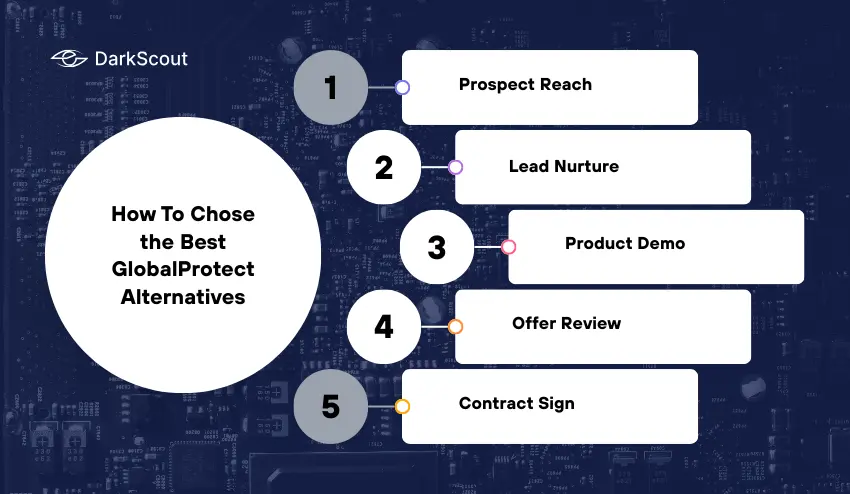
Not all secure access solutions fit all organizations. In order to make this list useful, we considered the reasons IT teams most often seek an alternative to GlobalProtect and compared tools with these criteria:
1. Security Strength
Replacement should be an enterprise-grade encryption, threat detecting and compliance ready.
2. Ease of Use
The solution must be easy to install, set up, and operate- without making employees run through hoops to connect.
3. Performance
Speed does not have to be sacrificed to access it remotely. We sought the tools that reduce latency and provide a smooth user experience.
4. Integrations
A quality VPN or secure access platform must integrate well with your existing tools- be it identity providers, endpoint security or cloud applications.
5. Cost and Scalability
Pricing models vary widely. We concentrated on solutions that are scalable to business size and requirements, whether it is startups or large businesses.
With these criteria we narrowed down to the 7 best GlobalProtect alternatives that would cater to various business needs and budgets.
You May Also Like: Network Security Scan: 5 Critical Tips to Protect Your System
The 7 Best GlobalProtect Alternatives
1. Zscaler

Among the most popular cloud-based secure access services, Zscaler is a solid alternative to GlobalProtect. Instead of the legacy VPN framework, Zscaler provides Zero Trust Network Access (ZTNA) as a cloud-delivered service. Which means there is no backhauling to a central datacenter and you can provide fast secure connections, regardless of where users work from.
Why Its a Solid Alternative to GlobalProtect
GlobalProtect can be cumbersome and difficult to manage, especially when dealing with a remote worker base. Zscaler sits in the cloud so scaling is easy and provides a typically better experience for the remote employee than legacy VPN approach.
Key Features
- Zero Trust access to applications without exposing the network.
- Cloud-based offering so you do not need any hardware.
- Has technology that has built-in threat prevention and data loss prevention.
- Works on any device and any location.
Pros
- Significant focus on speed and performance.
- Easy to scale for remote and hybrid team members.
- Decreases attack surface area with a Zero Trust approach.
Cons:
- Expense can be higher.
- Advanced features may have additional licensing costs.
Best For:
Enterprise customers with a global workforce who need fast, scalable, secure remote access without the difficulties associated with a traditional VPN.
2. Palo Alto Prisma Access – A Fresh Spin on GlobalProtect

Overview
Prisma Access is a Palo Alto Networks cloud-delivered secured access service edge (SASE) solution. In contrast to GlobalProtect which enabled VPN connectivity, Prisma Access delivers all of the networking security , firewall-as-a-service, and secure web gateway capabilities all in a cloud-native platform.
Why It’s a Great GlobalProtect Alternative
For customers already entrenched in Palo Alto’s ecosystem, Prisma Access is a reasonable evolution from GlobalProtect and retains many of the benefits of security that GlobalProtect offered, and removes the burden of managing a VPN infrastructure making it very easy to secure hybrid and remote teams at-scale.
Features
- Cloud-native SASE platform
- Built-in Zero Trust access and advanced threat protection
- Single pane of glass for management
- Comprehensive global coverage with cloud gateways
Pros
- Great integration with other Palo Alto tools
- The cloud delivery reduces hardware infrastructure
- Great for large, distributed enterprises.
Cons
- Cost prohibitive for small business
- Advanced installation can require professional services.
Best For
Palo Alto customers that have invested heavily in families of Palo Alto tools and want a more modern cloud-native alternative to GlobalProtect.
3. Cisco AnyConnect A VPN to be Relied on and Widely.
Overview
One of the most popular enterprise VPN solutions is Cisco AnyConnect. It offers secure remote access and has a high endpoint visibility and security controls. It is employed by many organizations due to the reliability and the broad integration of Cisco with the current IT infrastructure.
The reason it is a good GlobalProtect Alternative.
Businesses that require high stability and high security but do not want to pay a high price to learn how to use it tend to prefer AnyConnect. It is flexible to both small and big organizations and supports various devices and operating systems.
Key Features
- Strong-encryption VPN.
- Checks endpoint posture (checks compliance before access)
- The support of multi-factor authentication.
- Firewall through Cisco Secure Firewall and SecureX.
- iOS and Android mobile support.
Pros
- Relied upon by thousands of businesses all over the world.
- Well-integrated endpoint security.
- Scales both to small and big businesses.
Cons
- Licensing is complicated and expensive.
- User interface is out of date with current SASE platforms.
Best For
Organisations seeking a well-tested and trusted VPN offering with extensive security integration, particularly where they are already using the Cisco ecosystem.
4. Zscaler Private Access (ZPA) – Zero Trust Alternative (Cloud-Native).
Overview
Zscaler Private Access is not like conventional VPNs. ZPA does not link users to the whole network but rather offers a secure direct access to particular applications by identity and context. This renders it a robust selection to organizations that are heading towards Zero Trust Network Access (ZTNA).
Why It is a Good GlobalProtect Alternative.
GlobalProtect is also closely related to the VPN-type of entry, though ZPA does not need this baggage as it concentrates on the safety of applications. It is cloud-native and thus more easily scalable and more compatible with current remote and hybrid workforces.
Key Features
- Zero Trust access (users are never exposed to the full network)
- Installation on the cloud with no appliances required.
- Identity-based access control by policy.
- Multi-cloud and hybrid.
- Works across devices and places.
Pros
- Well-built Zero Trust security model.
- Eliminates attack surface by obscuring applications over the internet.
- Scales in a flash to international workforces.
Cons
- Probably excessive with small companies with basic VPN requirements.
- Good identity management is required to deploy smoothly.
Best For
Organizations that are moving to Zero Trust architecture and cloud migration, particularly those that have a distributed workforce and use a hybrid IT.
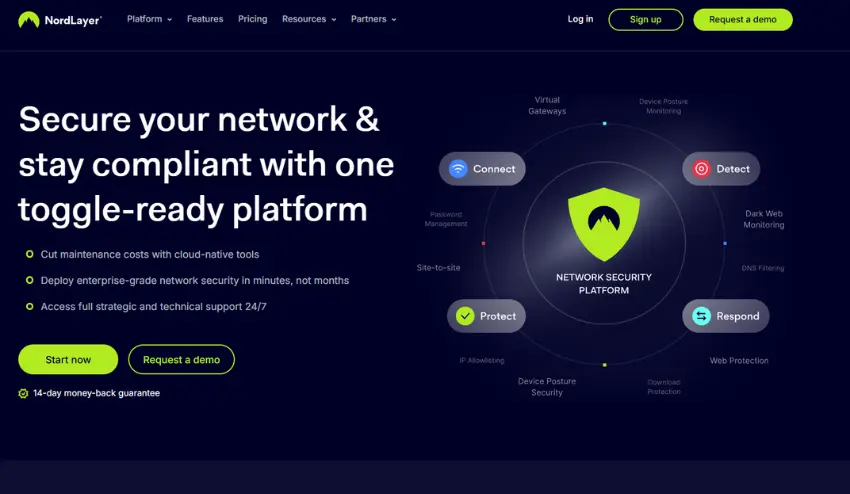
5. NordLayer – Business Secure Cloud VPN.
Overview:
NordLayer is a VPN that is business focused and prioritize the elements of security, speed and ease of management that VPNs require for organizations to operate on-line more efficiently. NordLayer is designed for the management of distributed teams, with emphasis on centralized control of network access.
Why it’s a good alternative:
NordLayer offers cloud-based management, making it easier to implement VPNs into several locations where GlobalProtect users frequently experience challenges. The adaptable programs also works for growing teams.
Key Features:
- User management centralized panel.
- Secure remote access dedicated IP options.
- Multi-factor authentication (MFA) enabled.
- International server network for reliable connections.
Pros & Cons:
Pros: Easy install, high encryptions standard, high performance, and scalability for teams.
Cons: A few aspects behind GlobalProtect on advanced endpoint protecting features.
Best For:
Small- to medium-sized businesses that need secure remote access now, without great IT involvement.
6. Perimeter 81 – Zero Trust Network and Cloud VPN.
Overview:
Perimeter 81 is a cloud VPN and a zero-trust network combined. It has been created in order to win over an offsite workforce, and cloud-based access.
Why it is a good alternative:
Perimeter 81 is an actual implementation of the zero-trust concept out-of-the-box, whereas GlobalProtect is not. This can assist companies to gain access to cloud applications and local resources without complex hardware equipment.
Key Features:
- Zero-trust network access (ZTNA).
- Cloud VPN site to site supported.
- Single sign-on (SSO) and MFA.
- Activity monitoring and reporting.
Pros & Cons:
Advantages: simple to implement, is a native cloud-based system, can be used in a hybrid network.
Cons: Small team pricing is a premium pricing, endpoint control is not as granular as GlobalProtect.
Best For:
Companies that have already switched to cloud-first operations and would like to use a basic yet secure method of remote access.
Conclusion
Selecting an appropriate VPN or remote access solution is based on the size of your team, your security requirements, and your IT resources. Whereas GlobalProtect does include powerful enterprise capabilities, other options such as NordLayer, Perimeter 81, Zscaler Private Access, and FortiClient are more flexible, deployable in the cloud, or offer a combination of endpoint security. ExpressVPN for Business and OpenVPN Access Server provide more affordable and more user-friendly options to smaller teams or IT-sophisticated organizations.
Get to know your priorities: speed, security, easy management and choose the solution that fits your workflow best. Each of the options mentioned below can enhance the security of remote access and respond to particular challenges GlobalProtect users might have.