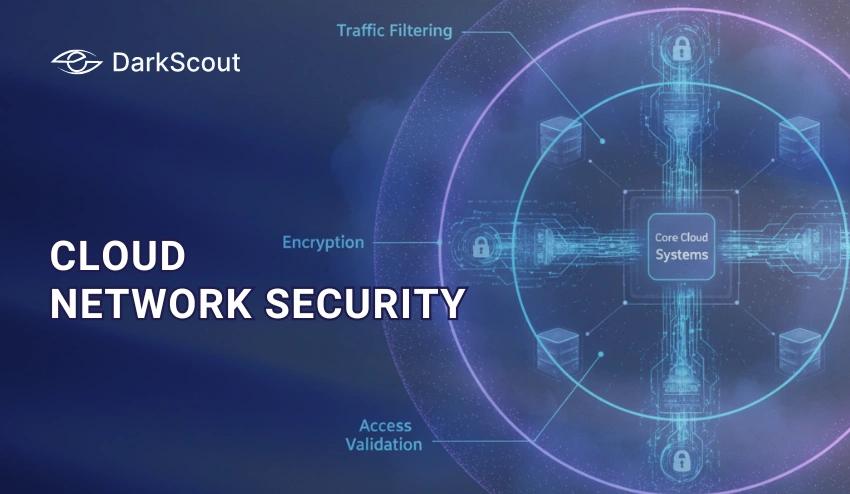
Cloud network security refers to the protection of the data flow within the cloud. It is concerned with establishing relationships among users, applications, and cloud servers in such a way that unauthorized access and attacks are prevented.
With the increase in data and systems being transferred to the cloud, the networks are no longer secured by physical walls. Cloud environments are based on the use of the internet, shared infrastructure, and software-defined controls. This renders the issue of network security in the cloud quite different as compared to traditional setups.
This blog will inform you of what cloud network security is, how it operates, and its significance. We will define some of the important terms, contrast cloud security with traditional network security, and provide some practical tips to cloud security that you can really use.
What Is Cloud Network Security?
Cloud network security is a process of securing data, systems, and traffic that travels within and between cloud networks.
Simply, it ensures that cloud resources can be accessed by only the right people and systems. It also secures information as it passes between users, servers and cloud services.
To illustrate, upon opening a cloud application, information passes through the cloud network by an employee. Cloud network security scans who is making a request, encodes the data being transferred and prevents unnecessary traffic. Such protection is managed with the help of such tools as firewalls, access rules, and network security keys.
Network Security vs Cloud Network Security
Network security is confused with cloud network security by many people. Although they both have the intention of safeguarding data and systems, they do so differently.
On-premise networks are normally safeguarded by network security. They are networks that are in-office or data center networks. Physical firewalls, routers, and hardware are used to manage security. Everything is owned and controlled by the organization.
On the other hand, cloud network security is used to protect cloud-run networks. These networks are software-based and distributed over the internet. Cloud tools are used to make security controls rather than physical devices. Cloud platforms handle access rules, firewalls and network security keys.
Control and scale is the largest difference. Conventional network security remains at the same location. The security of cloud network needs to be increased or reduced as the cloud resources vary. It is also characterized by a shared responsibility model where the cloud provider and the user have a part to play in ensuring that the network is secure.
Why Is Cloud Network Security Important?
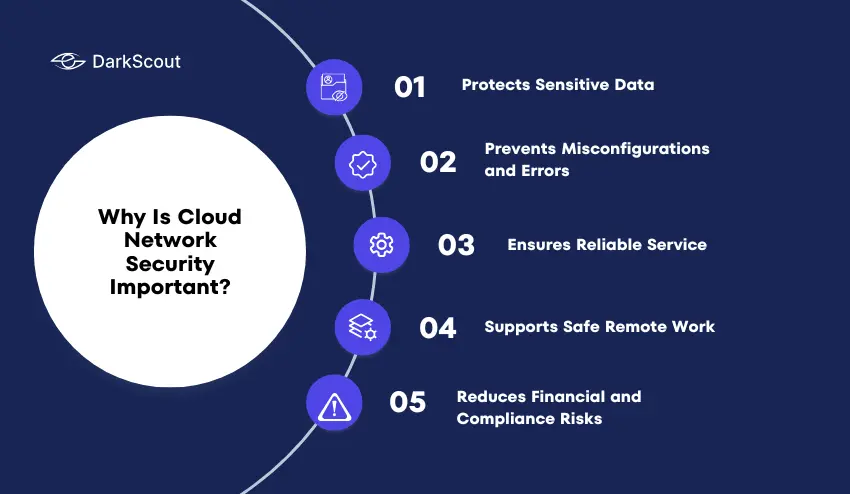
1. Protects Sensitive Data
Cloud networks process valuable information on a daily basis such as user data, business data and application traffic. This information can either fall into the hands of hackers or be stolen, without the right security.
2. Prevents Misconfigurations and Errors
Any minor errors such as leaving a port open or using a poor network security key can pose severe vulnerabilities. Such errors can be avoided by regularly monitoring and securing the cloud networks.
3. Ensures Reliable Service
Poor security may result in downtime in case the network is targeted by the attackers. Effective cloud network security ensures that applications and services are running well.
4. Supports Safe Remote Work
There are numerous teams that are connected to cloud systems remotely through software such as Virtual Private Network (VPN). Effective cloud network security will make sure that these connections are secure and monitored.
5. Reduces Financial and Compliance Risks
Breach of data or downtime may be expensive, destroy trust and cause legal issues. Cloud network security reduces these risks and assists organizations to remain in line with the rules.
What Are the Main Parts of Cloud Network Security?
Cloud network security consists of multiple components that interact to secure data, applications, and users. These elements can be understood to ensure that you can protect your cloud environment.
1. Network Segmentation
Network segmentation separates the cloud network into small parts. The security rules can be specific to each section. This will reduce the effects of attacks since once one part has been affected, the others will remain secure.
2. Firewalls and Security Groups
Cloud firewalls regulate the traffic that can be in or out of the network. Security groups are similar to a rule that determines who can access a particular resource. They can be used together to block undesirable traffic and only allow trusted connections.
3. Encryption in Transit
Encryption secures the data during the transfer of data among users, servers, and cloud services. Although the data may be intercepted, encryption will ensure that it cannot be deciphered by an attacker.
4. Identity and Access Controls
The access controls define the users of cloud resources and their actions. The network security key is strong and multi-factor authentication makes it more difficult to access it by an unauthorized user.
5. Monitoring and Logging
Tracks activity within the cloud network, and logs the events. Periodic network security tests will help identify vulnerabilities or suspicious activity in the network early and prevent attacks before they become harmful.
Types of Cloud Network Security
Cloud network security can vary depending on the type of cloud environment you use. Understanding these types helps you choose the right security approach.
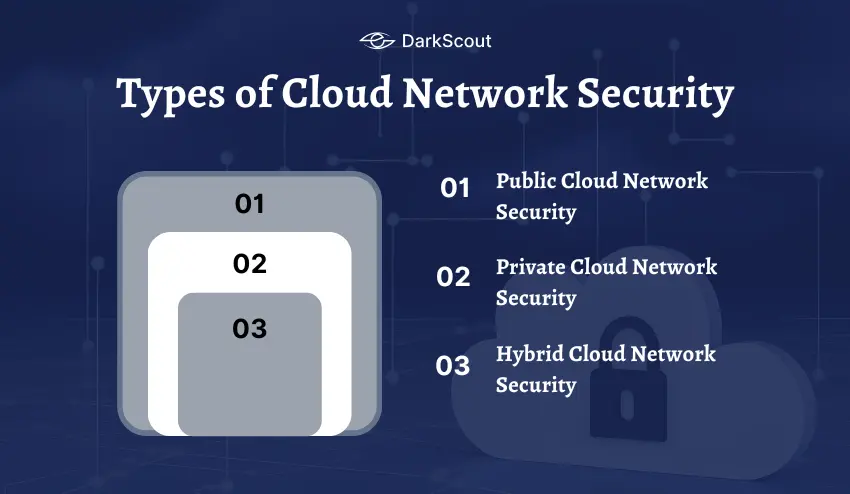
1. Public Cloud Network Security
Public clouds are communal environments that are operated by providers such as AWS, Azure, or Google Cloud. Security is distributed: the provider is in charge of infrastructure security whereas you are in charge of data and access. Periodic network security audits and robust access policies are needed in the public clouds.
2. Private Cloud Network Security
Single environments used by one organization are referred to as private clouds. Security settings, including firewalls, encryption, and network security keys, have greater control. The issue with private clouds is that they are more secure when managed correctly, but they demand more resources.
3. Hybrid Cloud Network Security
Hybrid clouds integrate both the public and the private environments. Both kinds of networks need to be secured, and it may need extra monitoring and policies to ensure the safety of data being transferred between environments.
Private Cloud vs. Public Cloud Network Security
In selecting a cloud environment, it is worthwhile to learn the difference between the network security of a private and a public cloud.
Public Cloud Network Security
Providers such as AWS, Azure, or Google Cloud control public clouds. Sharing of security:
- The infrastructure is secured by the provider.
- You lock up your data, applications and access points.
- Public clouds are affordable and scalable but have to be monitored closely using such tools as network security scans and VPNs.
Private Cloud Network Security
Private clouds are dedicated to a single organization. You have full control over:
- Firewalls
- Encryption
- Network security keys
Private clouds can offer stronger security if managed correctly, but they cost more and require skilled IT resources.
Which One Is More Secure?
Neither is automatically more secure. Public clouds are based on shared responsibility whereas the private clouds are based on appropriate internal management. Security is reliant on configuration, surveillance, and adherence to cloud security guidelines.
| Feature | Public Cloud | Private Cloud |
|---|---|---|
| Control | Shared | Full |
| Cost | Lower | Higher |
| Scalability | High | Medium |
| Responsibility | Shared | Organization only |
| Tools Required | VPN, network scans, access rules | Firewalls, encryption, access keys |
What Are the Biggest Cloud Network Security Threats?
Being aware of the primary threats will enable you to secure your cloud network before things go wrong.
Misconfigurations
Misconfiguration is the most prevalent problem with cloud networks. An open port, distribution of access keys, and lack of proper permissions can provide attackers with an easy point of entry. The network security scans should be done regularly to detect these errors.
DDoS Attacks
DDoS attacks flood cloud servers with traffic and result in downtime. The risk is mitigated with proper firewalls, traffic monitoring and cloud provider protections.
Insider Threats
Any employee or contractor who has excessive access may cause damage accidentally or deliberately. Identity and access control permissions and strong network security keys can be used to mitigate this risk.
Insecure APIs
APIs are commonly used in cloud applications. Unless these APIs are secured, hackers can use them to get access to data or cloud resources. It is necessary to use encrypted connections and track API activity.
How Do You Secure a Cloud Network? (Best Practices)
Securing a cloud network means combining several strategies and tools. Here are practical steps anyone can follow to protect cloud systems.
1. Use Zero Trust Networking
Zero trust implies that one should never think that he or she is safe because he or she is within the network. Each request is authenticated and access is only allowed where necessary. This limits the ability of attackers to move freely within your cloud.
2. Automate Security Rules
Rules used in firewalls, access permissions and monitoring are automated and minimize human error. Automation provides uniform security even when the cloud resources are scaled up or down.
3. Use of a Virtual Private Network (VPN) to gain access.
A Virtual Private Network (VPN) is used to encrypt the communication between users and cloud resources. This will ensure that attackers do not capture sensitive information as employees or contractors are connected remotely.
4. Conduct Periodic Network Security Scans.
A network security scan identifies open ports, misconfigurations and vulnerabilities in the cloud network. Automated scans must be done on a regular basis to identify issues before they are abused.
5. Segment Workloads
Segmentation of cloud resources prevents harm in case one area is affected. As an illustration, databases, applications, and user services are supposed to be isolated with their own rules and access controls.
Common Cloud Network Security Mistakes
- Not running regular network security scans – Misconfigurations and vulnerabilities go unnoticed without regular checks.
- Relying only on a VPN – VPNs are useful but should be combined with firewalls, access controls, and monitoring.
- Poor network security key management – Weak or shared keys make it easy for attackers to gain access.
- Ignoring internal traffic – Internal communications can be exploited if not monitored and segmented.
- Misconfigured access controls – Giving too many permissions increases risk; follow the least privilege principle.
Conclusion
Cloud network security is needed to secure data, applications and users in the cloud. With the help of knowing the difference between traditional network security and cloud network security, the correct use of tools, and best practices, it is possible to mitigate risks and ensure the security of your cloud environment.
The major measures are to conduct network security scans, to use a Virtual Private Network (VPN) to secure connections, to manage network security keys, and to routinely monitor cloud traffic. By adhering to basic cloud security recommendations and relying on the existing tools, businesses and individuals will be able to operate safely in the cloud.
Begin by assessing your cloud network today, implementing the best practices, and ensuring security is a priority. Securing your cloud network is not only a technical issue, but it is an essential step towards trust, trust, and confidence in the digital world.